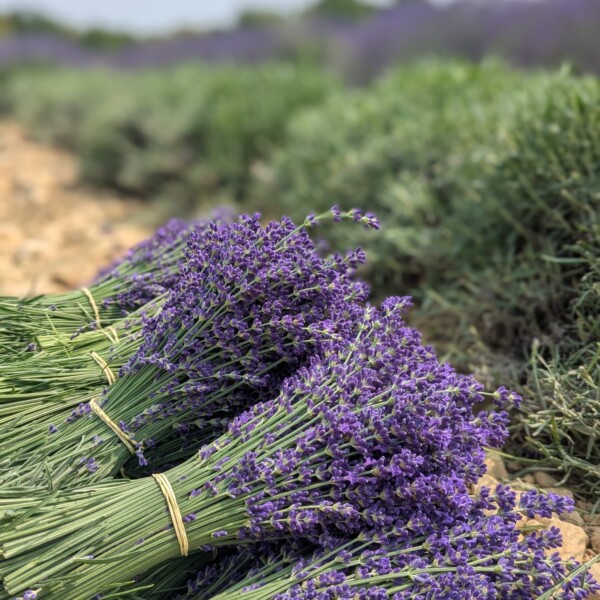
Sometimes all it takes is a scent to bring a memory back to life. The scent of lavender instantly takes us back to Provence: sun-drenched hills, purple rows swaying in the wind, the hum of bees in the height of July.
But the meaning of lavender goes far beyond its fragrance. For centuries, this flower has accompanied traditions and inspired countless beliefs. A symbol of serenity, purity and fidelity, it holds a special place in the language of flowers.
At Lavande Bio Bérenger, we have been growing lavender on the Valensole plateau since 1932, and organically since 2002. Here’s what this flower tells us, through history, tradition and a few growers’ secrets.
What does lavender symbolize?
In the language of flowers, lavender is associated with three main values. Its delicacy, its color and its fragrance all explain this symbolism.
Serenity and inner peace
This is its best-known meaning. Its scent evokes calm and harmony: an invitation to slow down and take care of oneself. Giving lavender means wishing peace of mind to someone dear.
Purity and cleanliness
Its name is often linked to the Latin lavare, meaning “to wash” (though some linguists favor livere, meaning “bluish”). Tradition has it that the Romans used it to scent their bathwater.
Love and fidelity
Its spikes, pressed close together on a single stem, bring to mind an image of harmony and attachment. This is why it holds such an important place in Provençal weddings.
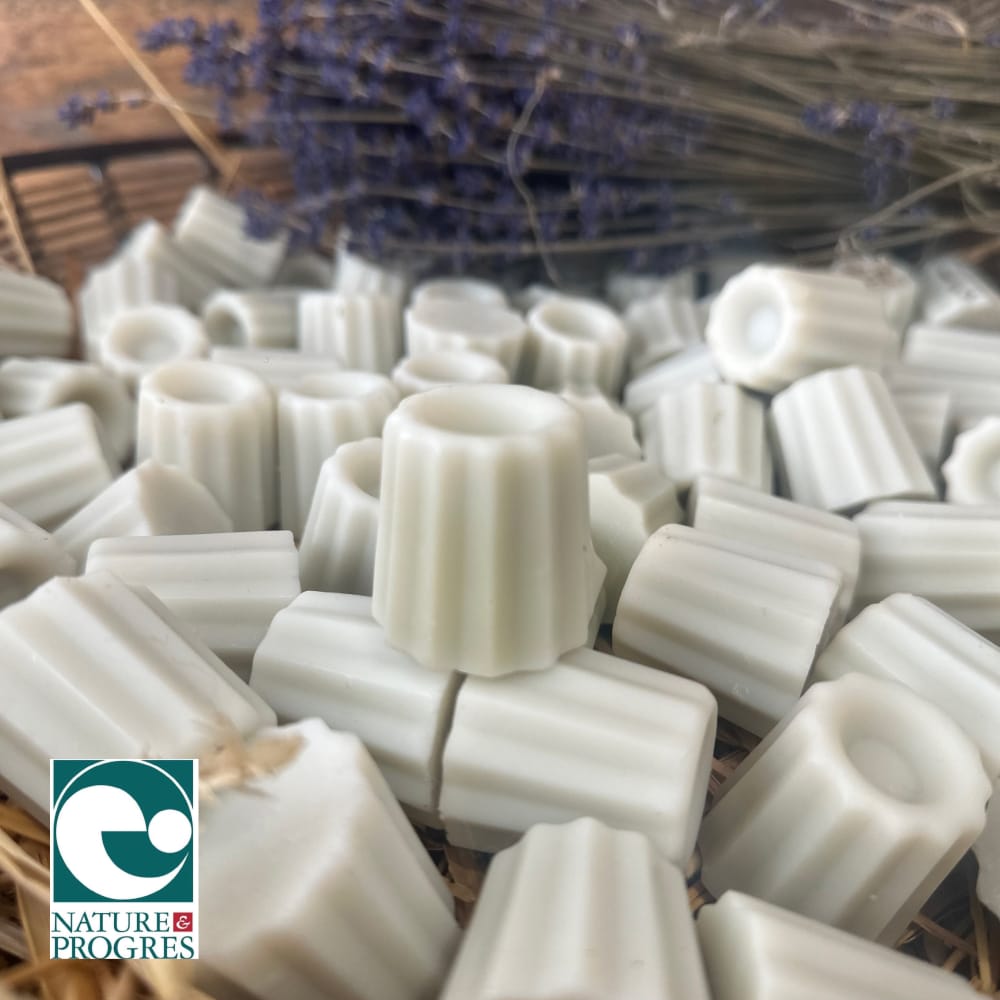
Its image of purity lives on today in everyday rituals, such as our organic fine lavender soap.
➜ Also read: A Provençal wedding: lavender takes center stage
What does lavender’s purple color mean?
Purple is traditionally associated with spirituality, wisdom, intuition and delicacy. It also evokes mystery and elegance. For centuries, this color was reserved for the powerful, as purple dyes were rare and costly.
Lavender thus brings together two worlds: the simplicity of a wildflower and the refinement of a noble color.
Blue-violet
Lavender
Light mauve
Deep purple
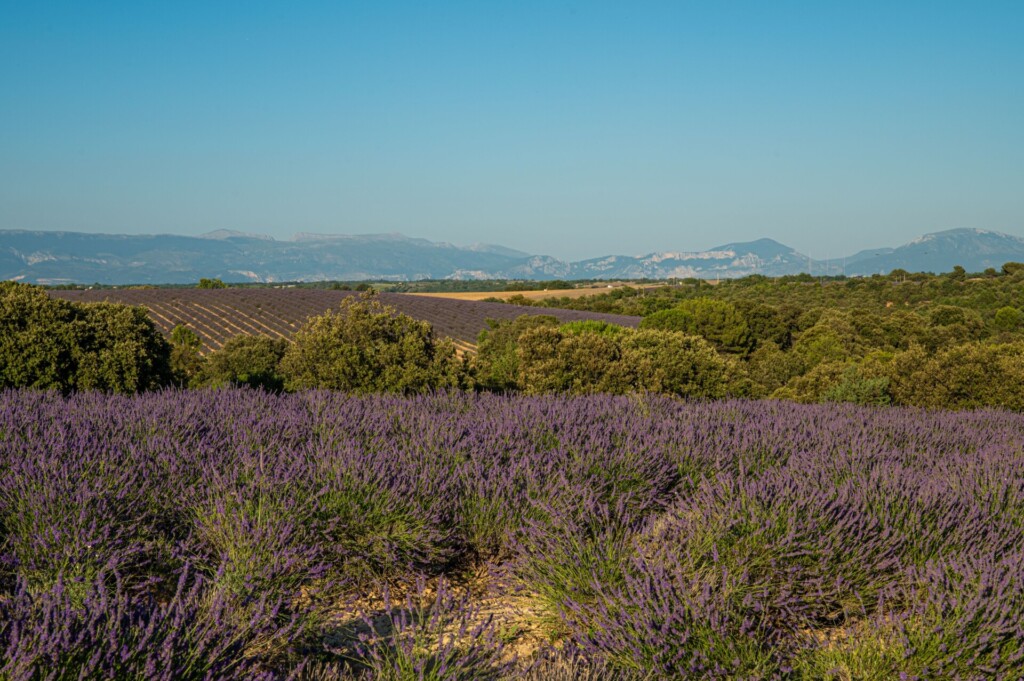
Its shades vary depending on the variety, altitude and sunlight. On the Valensole plateau, the scenery changes from one field to the next during the blooming season, between late June and July.
Lavender through history: a flower known since ancient times
Antiquity
The Egyptians already used aromatic plants in their perfumes and funeral rites. The Greeks and Romans made it part of their bathing rituals; lavender is said to have been used to scent bathwater and linens.
Middle Ages
Lavender grows in monastery gardens, cultivated for its fragrance and household uses.
Early 20th century
In Haute-Provence, the gathering of wild lavender gradually gives way to true cultivation, shaping the landscapes we know today.
1932
Our family begins growing lavender in Valensole.
2002
Our crops become organically certified.
Legends and popular traditions surrounding lavender
Like many age-old plants, lavender has its share of beliefs. It was said to protect homes, attract love and bring peace to the household. Some of these practices are still passed down from generation to generation. For linens and the home, it is mainly lavandin, with its stronger scent, that is used:
Under the pillow
A small sachet of dried lavender flowers slipped near the bed to encourage peaceful sleep.
In the wardrobe
Dried lavandin flowers to scent linens and keep moths away.
Around the home
Bunches of lavandin hung up to fill rooms with fragrance all winter long.
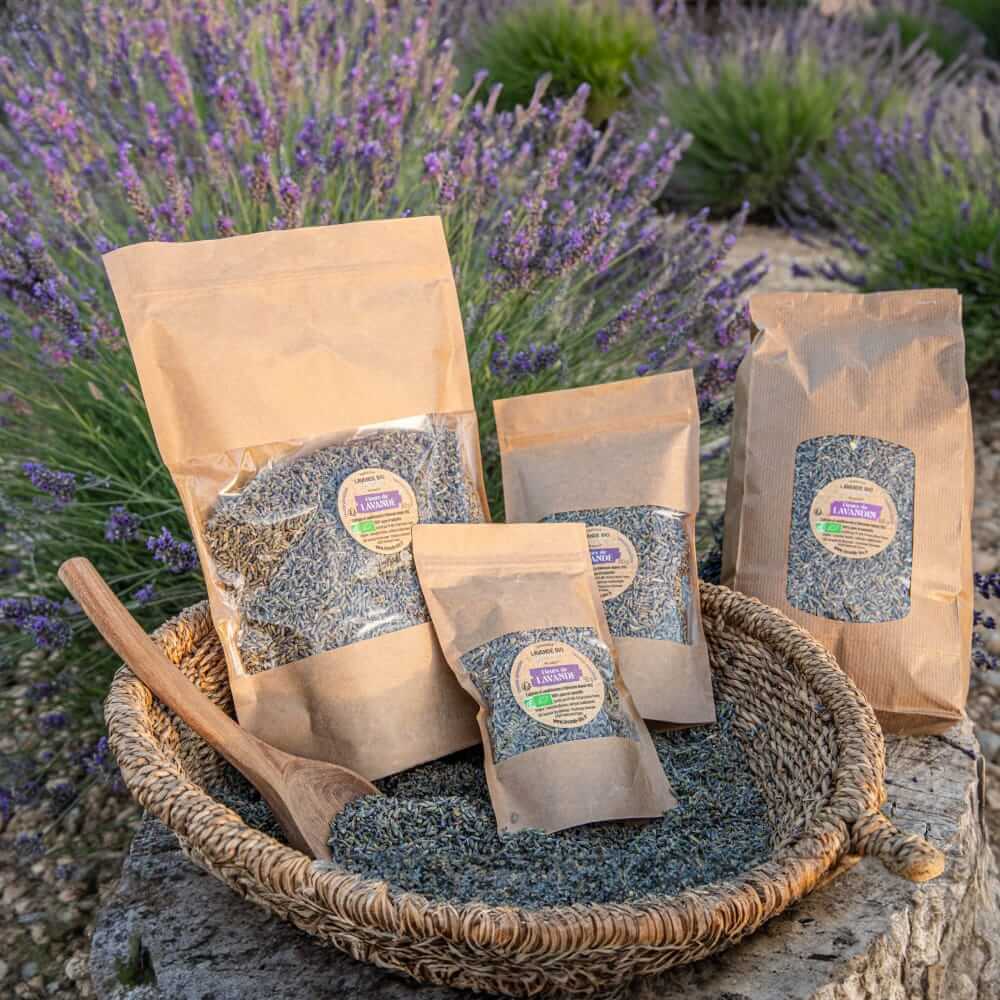
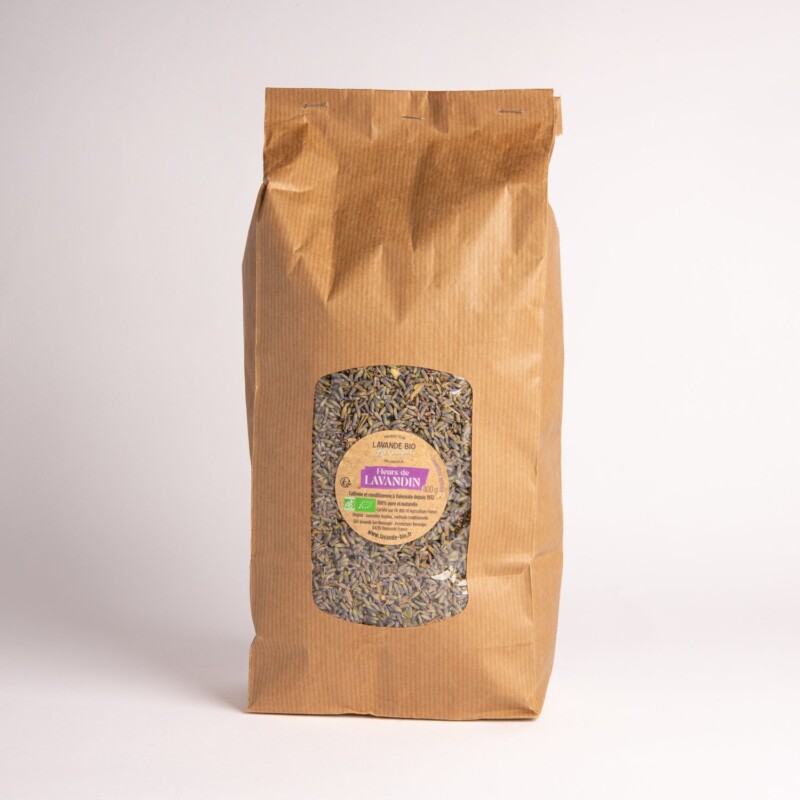
These simple gestures are still part of the Provençal way of life: lavender has become a symbol of the welcoming home.
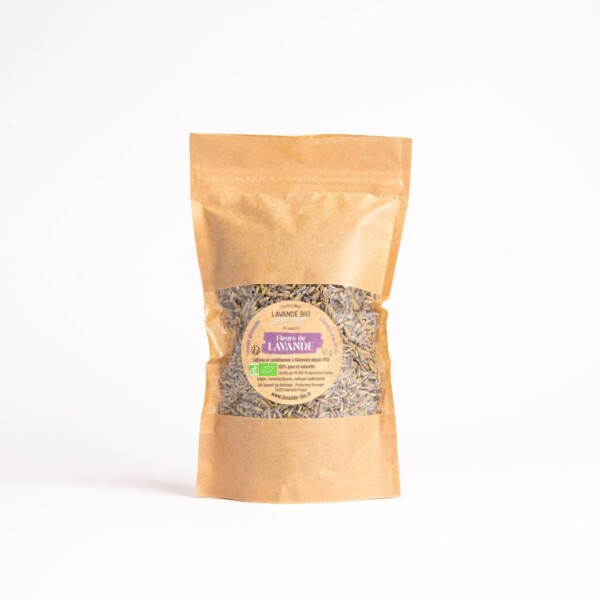
➜ To bring them into your home: our organic lavender flowers in sachets and our organic lavandin flowers in sachets
Why is lavender associated with sleep and relaxation?
Its distinctive scent comes from aromatic molecules naturally present in its flowers, especially linalool and linalyl acetate.
True lavender essential oil (Lavandula angustifolia) has been the subject of scientific research into its possible effects on relaxation and sleep quality. It can therefore be found in many products designed to create a soothing atmosphere: scented sachets, essential oils, soaps and pillow mists.
Good to know: effects vary from person to person. An essential oil should always be used according to its precautions for use. Seek advice from a healthcare professional, especially for pregnant or breastfeeding women and young children.
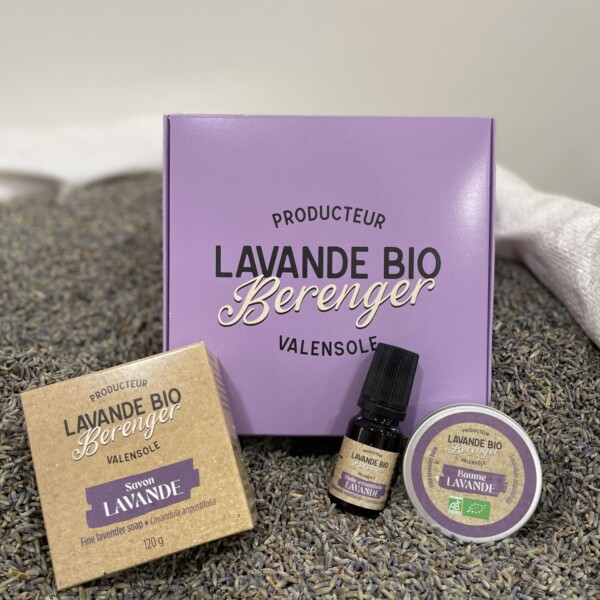
➜ Also read: Lavender and the evening ritual: the Valensole guide, and discover our Fine Lavender Sleep Gift Set
Little-known secrets of the lavender flower
It loves the sun
Native to the Mediterranean basin, it prefers poor, stony, well-drained soil and withstands drought well.
A friend to bees
Rich in nectar, it attracts pollinators and supports biodiversity. It’s from lavender that lavender honey is born.
A scent that lasts
When properly harvested and dried away from light, it keeps its scent for many months. That’s why it’s often used in sachets.
A large family
Fine lavender, lavandin, spike lavender, French lavender… They may look alike, but they differ in both scent and use.
Beautiful even when dried
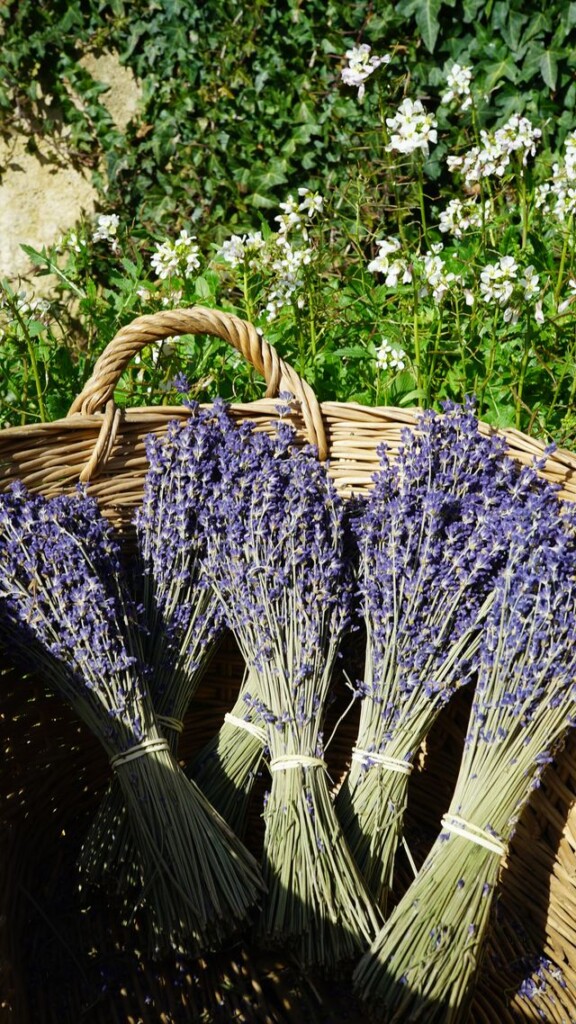
As a bouquet, it keeps its color and continues to evoke the Provençal summer, even in the depths of winter.
What is the difference between true lavender and lavandin?
They are often mistaken for one another, yet these are two distinct plants. Both have their place: fine lavender for relaxation and skincare, lavandin for the home, linens and cleaning.
| True lavender (fine lavender) | Lavandin | |
|---|---|---|
| Latin name | Lavandula angustifolia | Lavandula × intermedia |
| Origin | Wild species | Natural hybrid of true lavender and spike lavender |
| Altitude | Between approximately 600 and 1,500 m | Lower altitude |
| Appearance | Small clumps, short spikes | Larger, with more abundant flowers |
| Scent | Fine, soft and floral | Strong and camphorous |
| Uses | Relaxation, skincare | Home, linens, cleaning |
Lavandin produces far more essential oil than true lavender: it’s what colors most of the fields on the Valensole plateau.
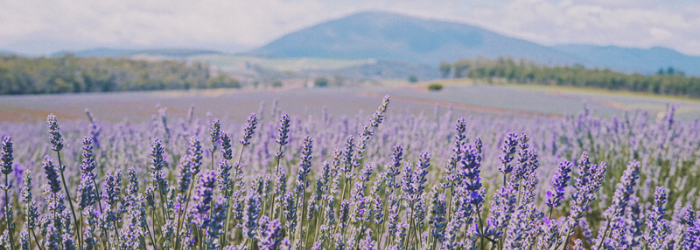
➜ To learn more: everything you need to know about fine lavender, everything you need to know about lavandin, or test yourself with “Lavender or lavandin? Bet you’ll get it wrong!”
Why is lavender the emblem of Provence?
It’s impossible to think of Provence without picturing its purple fields. They are among the most iconic landscapes in the south of France and draw visitors from around the world every summer, especially to the Valensole plateau.
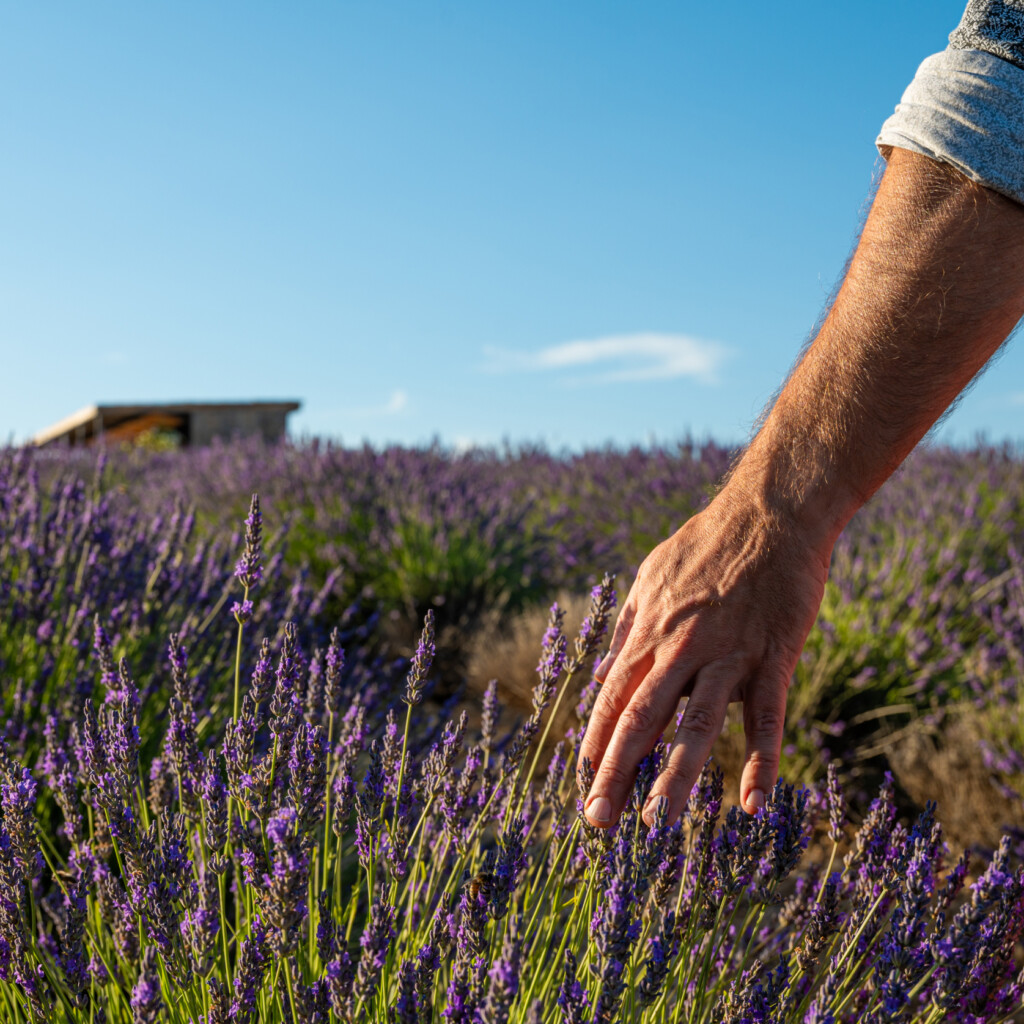
“Growing, harvesting, distilling: lavender is a craft passed down from generation to generation.
It embodies a way of life built on simplicity, nature and sunshine, and reminds us of the importance of preserving the landscapes and biodiversity of our countryside.
Giving lavender as a gift: what message does it convey?
A bouquet of dried lavender, a scented sachet or a gift set are simple yet meaningful gestures. Depending on the occasion, lavender can say:
To a loved one: a token of tenderness and sincere affection.
To someone feeling stressed: a wish for serenity and gentleness.
For a housewarming: a symbol of freshness, harmony and conviviality.
For a wedding: an evocation of fidelity and shared happiness.
For a natural gift: an authentic gesture, straight from Provence.
Our ideas for giving a taste of Provence:
Super Blue BouquetLavender Heart PebbleGift sets and gift vouchers
The meaning of lavender in brief
What does lavender symbolize?
Mainly serenity, purity and faithful love.
What does it mean to give lavender as a gift?
It means wishing someone calm and well-being, or showing them sincere, lasting affection.
Where does the name “lavender” come from?
It is most often traced back to the Latin lavare, meaning “to wash”, in reference to its use for bathing and laundering.
What is the difference between lavender and lavandin?
True lavender grows at higher altitudes and has a soft, floral scent; lavandin is a larger hybrid with a more camphorous scent.
Lavender, a flower with a soul
It is not just a pretty purple flower with an inimitable fragrance. It tells a story: one of Mediterranean traditions, age-old gestures, Provençal landscapes, and a precious bond between people and nature.
Fresh, dried, in the garden or as an essential oil, it reminds us that nature’s most beautiful treasures are often the simplest ones.
💜 A little piece of Provençal sunshine to carry with you, wherever you go.
Lavender grown and distilled in Valensole
Since 1932, the Bérenger family has been growing lavender and lavandin in the heart of Valensole, organically since 2002. This family expertise has naturally led to the creation of authentic products, made in France.
Today, we also want to share this world beyond our own region.
➡ Discover our story: Who we are.
💜 Choosing products from local growers also means supporting traditional skills, valuing goods made in France, and giving real meaning to a thoughtful gift.
-
Lavender flowers 50 to 300 gr bag
From 4,90 € This product has multiple variants. The options may be chosen on the product page -
Dried Super Blue lavender bouquet
Rated 4.67 out of 55,00 € -
Sale!
Fine Lavender Sleep Gift Box
32,70 €Original price was: 32,70 €.29,90 €Current price is: 29,90 €.